Thursday, December 20, 2007

Do You See What I See?


We are not told that the shepherds and the Magi saw the same thing. We know that the Magi saw the star: Matthew 2:1-2, 7, 9-10
After Jesus was born in Bethlehem in Judea, during the time of King Herod, Magi from the east came to Jerusalem and asked, "Where is the one who has been born king of the Jews? We saw his star in the east and have come to worship him." ... Then Herod called the Magi secretly and found out from them the exact time the star had appeared. ... After they had heard the king, they went on their way, and the star they had seen in the east went ahead of them until it stopped over the place where the child was. When they saw the star, they were overjoyed.


We are never told if the shepherds who saw Jesus in the manger saw the star or not. Luke 2:8-20
And there were shepherds living out in the fields nearby, keeping watch over their flocks at night. An angel of the Lord appeared to them, and the glory of the Lord shone around them, and they were terrified. But the angel said to them, "Do not be afraid. I bring you good news of great joy that will be for all the people. Today in the town of David a Savior has been born to you; he is Christ the Lord. This will be a sign to you: You will find a baby wrapped in cloths and lying in a manger." 

Suddenly a great company of the heavenly host appeared with the angel, praising God and saying, 
"Glory to God in the highest,
and on earth peace to men on whom his favor rests." 

When the angels had left them and gone into heaven, the shepherds said to one another, "Let's go to Bethlehem and see this thing that has happened, which the Lord has told us about." 

So they hurried off and found Mary and Joseph, and the baby, who was lying in the manger. When they had seen him, they spread the word concerning what had been told them about this child, and all who heard it were amazed at what the shepherds said to them. But Mary treasured up all these things and pondered them in her heart. The shepherds returned, glorifying and praising God for all the things they had heard and seen, which were just as they had been told.
Therefore, the star has been misnomered "the star of Bethlehem" since we know that the Magi followed the star, which had been in the sky about 2 years, to where the child and mother lived. Jesus was raised in Nazareth, but they first saw the star in the east.

So while the shepherds (and lambs) may have seen this star, there is no textual evidence that they did.

original image source

Friday, December 14, 2007

We Three Kings


We three kings of Orient are/bearing gifts we've traveled afar/field and fountain moor and mountain following yonder star

The Bible never tells us that kings visited Jesus.
Instead we are told in Matthew 2: 1-12:
After Jesus was born in Bethlehem in Judea, during the time of King Herod, Magi from the east came to Jerusalem and asked, "Where is the one who has been born king of the Jews? We saw his star in the east and have come to worship him." 
When King Herod heard this he was disturbed, and all Jerusalem with him. When he had called together all the people's chief priests and teachers of the law, he asked them where the Christ was to be born. "In Bethlehem in Judea," they replied, "for this is what the prophet has written:
" 'But you, Bethlehem, in the land of Judah,
are by no means least among the rulers of Judah;
for out of you will come a ruler
who will be the shepherd of my people Israel.'" 

Then Herod called the Magi secretly and found out from them the exact time the star had appeared. He sent them to Bethlehem and said, "Go and make a careful search for the child. As soon as you find him, report to me, so that I too may go and worship him." 

After they had heard the king, they went on their way, and the star they had seen in the east went ahead of them until it stopped over the place where the child was. When they saw the star, they were overjoyed. On coming to the house, they saw the child with his mother Mary, and they bowed down and worshiped him. Then they opened their treasures and presented him with gifts of gold and of incense and of myrrh. And having been warned in a dream not to go back to Herod, they returned to their country by another route.

Magi, "Wise Men," some have speculated from the region of Peria, but we have no indication that they were kings.

Notice also that the above passage does not specify how many Magi visited Jesus. They brought three kinds of gifts, but that does not necessitate only three visitors.

Note we are also not told what kind of animal they rode. They could have ridden on horseback instead of camelback (which would have be a faster means of transportation.) We can speculate, but we do not have definitive proof.

One thing we can know for certain is that the Magi were not present at or shortly after Christ's birth.

Again, the above passage states on coming to the house this does not indicate the place where Mary and Joseph stayed while in Bethlehem (Luke 2:7). We also find from Matthew 2:16-18:
Then Herod, when he saw that he had been tricked by the wise men, became furious, and he sent and killed all the male children in Bethlehem and in all that region who were two years old or under, according to the time that he had ascertained from the wise men. Then was fulfilled what was spoken by the prophet Jeremiah: 
"A voice was heard in Ramah,
weeping and loud lamentation,
Rachel weeping for her children;
she refused to be comforted, because they are no more."


We can probably guess that it had been about two years since the Messiah was born given the above passage. Since Herod had found the exact time the star appeared from the Magi, Herod acted accordingly by killing all those that age and younger.

Thus, the Magi visited a house, not the manger, and saw Christ probably around two years after his birth, not at his birth. We have no indication that the Magi were kings, what beast of burden carried them, or how many of them there were.

original image source

Saturday, December 8, 2007

Déjà Vu

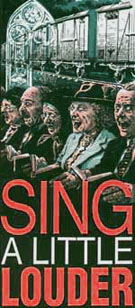
I lived in Germany during the Nazi holocaust. I considered myself a Christian. I attended church since I was a small boy. We had heard the stories of what was happening to the Jews, but like most people today in this coutnry, we tried to distance ourselves from the reality of what was really taking place. What could anyone do to stop it?

A railroad track ran behind our small church, and each Sunday morning we would hear the whistle from a distance and then the clacking of the wheels moving over the track. We became disturbed when one Sunday we noticed cries coming from the train as it passed by. We grimly realized that the train was carrying Jews. They were like cattle in those cars!

Week after week that train whistle would blow. We would dread to hear the sound of those old wheels because we knew that the Jews would begin to cry out to us as they passed out church. It was so terribly disturbing! We could do nothing to help these poor miserable people, yet their screams tormented us. We knew exactly at what time that whistle would blow, and we decided the only way to keep from being so disturbed by the cries was to start singing our hymns. By the time that train came rumbling past the church yard, we were singing at the top of our voices. If some of the screams reached our ears, we'd just sing a little louder until we could hear them no more. Years have passed and no one talks about it much anymore, but I still hear that train whistle in my sleep. I can still hear them crying our for help. God forgive all of us who called ourselves Christians, yet did nothing to intervene.

Now, so many years later, I see it happening all over again in America. God forgive you as Americans for you have blocked our the screams of millions of your own children. The holocaust is here. the response is the same as it was in my country -- Silence!
The story of an elderly gentleman he told to Penny Lea, as told in Alvin Reid's book Introduction to Evangelism, pg 339, quoting the brochure, "Sing a Little Louder," by Penny Lea.

Wednesday, December 5, 2007

I Want to Look Through a Waterfall


I want to be on the other side of a waterfall looking out at the world. OK, so I've been behind pool waterfalls. Those don't count. I want to go behind a natural waterfall, both small and great. And from there I want to view the world.

I want to do this because I think that we probably are viewing reality from behind a waterfall right now. We think we know how things look, but one day we'll step out and see the truth and realize reality was distorted more than it seemed. The writer of Corinthians put it this way "now we see as in a mirror, then we shall see face to face. Now I know in part, then I shall know in full, even as I am fully known."


and, no, I didn't take the picture...if I remembered where I found it I would link to the original source

Friday, November 30, 2007

C. S. Lewis' Space Trilogy {A Series Review}

The Space Trilogy. An amazing trilogy that I absolutely loved reading. It was utterly unlike anything I expected, yet still managed to far surpass any expectation and pre-conceived notion about the text.

Each book in the trilogy can be read separately, or in the larger unit, which is what I did.

Out of the Silent Planet was very interesting and made me think about humans in a different light. The fear of humans is largely addressed in this book. And such descriptions!

"...the stars, thick as daises on an uncut lawn, reigned perpetually with no cloud, no moon, no sunrise to dispute their sway."


"There, totally immersed in a bath of pure ethereal colour and of unrelenting though unwounding brightness, stretched his full length and with eyes half closed in the strange chariot that bore them, faintly quivering, through depth after depth of tranquility far above the reach of night, he felt his body and mind daily rubbed and scoured and filled with new vitality."


"They had the experiences of a pregnant woman, but magnified almost beyond endurance."


"Suddenly the lights of the Universe seemed to be turned down. As if some demon had rubbed the heaven's face with a dirty sponge, the splendour in which they had lived for so long blenched to a pallid, cheerless and pitiable grey."


"He saw nothing but colours - colours that refused to form themselves into things."


"Nothing could be more disgusting than the one impression; nothing more delightful than the other. It all depended on the point of view."


"Bent creatures are full of fears."


I have a general review here with more quotes - it really is breathtaking how amazing Lewis is with words.

Perelandra - what an amazing book - and packed with such theology! I wanted to turn around and read it again as soon as I was done. However, I felt much like Random with the fruit and the bubbles. Is it right? Should such goodness be indulged in so soon after finishing it? I'm not one of those people to read certain books (save the Bible) repeatedly and continually, or even once a year. This book, however, might become an exception. I want to get my hands around what Lewis was communicating because it presented a different way of looking at some doctrinal points I had not previously thought about.

That Hideous Strength was interesting. The Medieval feel to it was nice (I like Arthur and the Round Table and such) and I thought Lewis did a good job of bringing tension to the table and keep your emotions tied up. In a good way, of course, it made you want to keep reading - not stop reading. It also references Numinor. If you aren't familiar with Numinor, read the works of J.R.R. Tolkien. I thought that was nifty, it gave Middle-earth and the Trilogy a more "real" feel because there was a cross-reference. All in all, though, this is definitely my least favorite in the trilogy. I think Lewis tried to pack a little much into the book (it's twice as thick as the others, and a much slower read.)


Really all of the books were wonderful and I highly recommend them. Middle school-aged and above should be able to appreciate the Space Trilogy. If you can only read one of them, for some reason, I would suggest Perelandra, mainly because of the depth of thought in that book. I would recommend Out of the Silent Planet if you want to reawaken a sense of wonder, and I would submit That Hideous Strength to you if you were interested in modern development and a modern good vs evil in a somewhat more applicable way as it deals post-fall instead of pre-fall as in Perelandra.

C.S. Lewis is just an amazing writer. I have never read something of his I did not enjoy. Not that I've read everything he wrote, but I have read a decent portion of it. If you ever want to be challenged and read something understandable and well written, pick up C.S. Lewis.

This post does contain affiliate links. This means that, at no additional cost to you, I may receive compensation for referring business. Thank you for your support!

Wednesday, November 28, 2007

Keep Your Hand at the Level of Your Eye!


This post contains "spoiler" information (regarding both the book and the movie Phantom of the Opera) to some degree or another. Consider yourself warned.

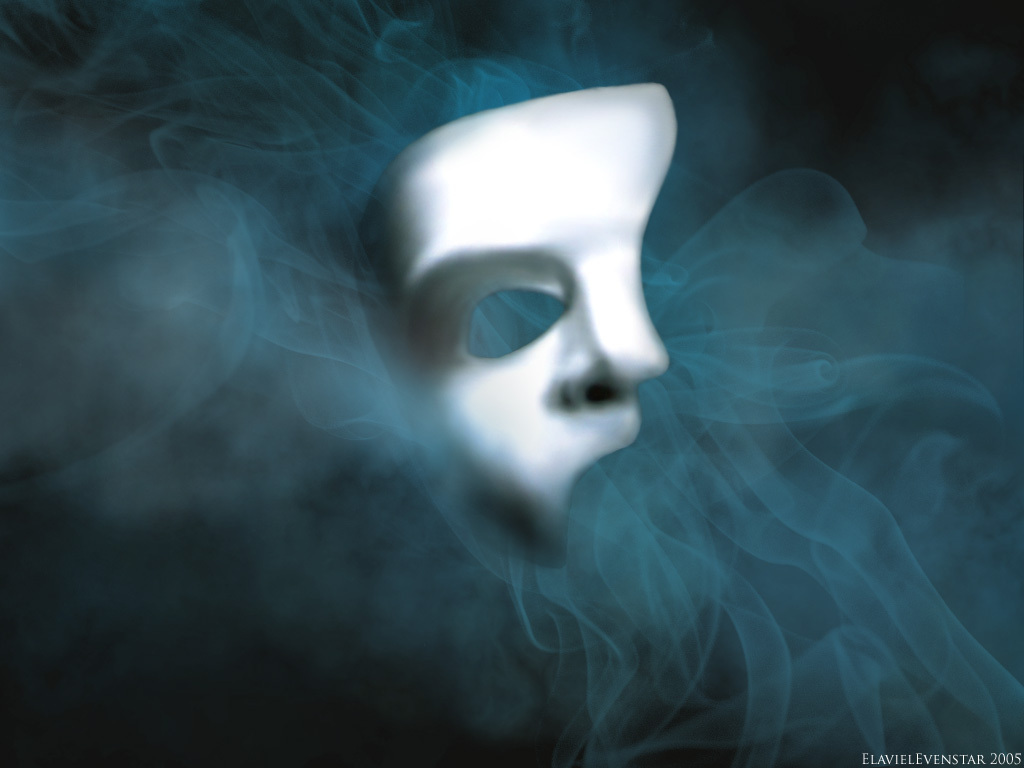
I don't know how many of you have read Phantom of the Opera or seen the movies, but the concept of keeping your hand at the level of your eye is very important (though not well explained in the movies I've seen). The Persian (who is somewhat replaced by Madame Giry in the movie) knew the Opera Ghost (O.G.) before he came to Opera House. Resultantly, he was very familiar with the O.G.'s capture techniques; one of his favorites happened to be the lasso. If he got the rope around your neck, you were dead.

Raoul, in his quest for Christine's safety, places his life in the hands of the Persian. The Persian tells him to always hold his hand out in front of him at the level of his eye like he was holding a revolver and about to fire. His revolver, however, he was to keep on his hip. Raoul did not know why the Persian told him to do this, and the Persian could not take the time to explain. The Persian knew, however, that if the lasso successfully got around your neck and your hand in that position you were able to easily free yourself from the O.G.'s snare. Raoul did not know this, he just had to trust in the Persian.

This concept struck me. We, too, are following someone, though we don't always know our quest, sometimes we do. We can get so focused on our goal (saving Christine/[insert your goal here]) that we sometimes forget to protect ourselves from the enemies attack (the lasso/[insert attack here]) - I mean, after all, if you don't know why you are doing something it can seem rather trivial and unimportant, and our guide (the Persian/[the Triune God]) must remind us to resume our position.

We do not always know the enemies attacks and what they look like, but God does. He has told us that we can keep his path by hiding His word in our heart. His word protects us in ways we do not always know, and we can be in situations where we are attacked, but because we have done what our guide told us to do (though we knew not why) we can counter that attack through the method the guide gave us.

So whatever you do, follow your guides orders. Even if you don't understand why, follow and obey. And always keep your hand at the level of your eye!

original image source
This post does contain affiliate links. This means, at no additional cost to you, I may receive a small commission for referring business. Thank you for your support!

Thursday, November 22, 2007

Thanks-giving


Happy Thanksgiving to all my readers! I am truly grateful for the abundant blessing of God, and I pray that everyone of you are also blessed beyond what you deserve.

Consider this the official end of the series on Abortion. I will continue to post relevant information from time to time, but will not continue to regularly post on the topic.

I am very thankful for life, for my life. Just remember, you wouldn't have a choice if your mother has chosen abortion. Choose life - your child will be grateful.

God bless you all.

original image source