Wednesday, January 23, 2008

35 Years Later {The Legacy of Abortion}


January 22, 2008 - the 35th anniversary of Roe v Wade - this commentary was delivered by PFM President Mark Earley.

The Legacy of Abortion

By Mark Earley

A woman-let's call her Caroline-was 92 years old. She was dying, in agony, but Caroline's pain was not physical. It was emotional. Caroline, you see, had been carrying a secret for more than 50 years: As a young woman, she had undergone two abortions, suffered terrible guilt all her life-and now, on her death-bed, afraid that God could not forgive her.

As her palliative-care nurse, Jean Echlin, writes, "At the end of her life she shared with me her agony over her lost babies . . . she felt that she had committed murder."

Caroline is not alone, as Echlin writes in Perspectives 2007, a publication of the De Veber Institute for Bioethics and Social Research. Echlin also tells the story of a woman named Lydia, who was dying of cancer. Even with the use of a pain pump, which gave her steady doses of morphine, Lydia's pain did not abate.

"I asked her if her faith or prayer could be of any comfort," Echlin writes. "Lydia remained silent except for her moaning." But the next day she confided the truth. "I can't pray-God won't listen," Lydia said. "I killed a precious baby when I was 18 . . ." Lydia's abortion had taken place more than 40 years ago-and she was still grieving over it.

Caroline and Lydia are but two examples of what the Institute calls an "unexpected correlation" between abortion and pain-relief care. Dying women experience unresolved guilt and psychological pain related to their abortion-guilt and pain that stand in the way of a peaceful death. Their guilt is so great, Echlin says, that it impedes the effectiveness of their pain medication. Only when the abortion issue is resolved-when someone listens to them and assures them of God's forgiveness-is the pain medication made effective, and the women able to die peacefully.

This is dramatic testimony that abortion is not, as the abortion lobby claims, something women will "get over" in a week or two. It is evidence that we know inherently that we are made in the image of the God who gives life. When we do violence to that image-when we destroy life instead of nurturing it-it has a profound effect on our emotions, our psyche, and our souls.

Today, as we mourn the 35th anniversary of Roe v. Wade, and the tens of millions of abortions that have resulted from this dreadful decision, we must recognize that there are likely many women among us who are silently suffering abortion grief decades after their babies' lives were snuffed out. As the De Veber Institute notes, these women need our compassion, and their trauma should be recognized and acknowledged by their care providers.

As we comfort the dying, we must also help the living. We must make sure young women know the truth: that abortion takes a human life; that there are alternatives to abortion; and that there are people who will help them through a difficult, unplanned pregnancy.

And they must be told that the notion that they will simply "get over" an abortion is a bold-faced lie. The truth is that if they walk into that abortion clinic, they may still be feeling the agony over taking their baby's life-even on their deathbed a half century later.


Featured article from Breakpoint, the newsletter of Crosswalk.com, on January 22, 2008. Email entitled "Crosswalk: The Legacy of Abortion - January 22, 2008."

original image source

Friday, January 18, 2008

What About Picketing?


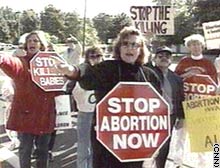
Should we picket outside of abortion clinics?

This is a very serious question. I have been trying to find a particular testimony I read of a woman who chose not to have her abortion because of caring people who took time to talk to her as they were picketing outside the clinic she was entering. If you know of a link to this story or one like it, please send it to me or post it here. I have read hundreds if not thousands of post-abortion, almost-had-an-abortion, glad-I-didn't-have-an-abortion, etc testimonies from many sites over a period of years. It takes a long time to re-read all of them.

So I have a mixed response to the question. Do I think it can be helpful and beneficial? Absolutely. That's why the particular testimony I reference stuck with me forcefully. That why I have participated in picketing that was thoughtful, respectful, kind, and prayerful. I think that kind of picketing (on public grounds - DON'T TRESPASS!) is wonderful.

At the same time, I utterly loathe in-your-face; you're-a-murder; hell, fire, and brimstone picketing. Have compassion for pity's sake! Imagine the turmoil the woman is already going through. Be gentle, be kind, and do tell the truth, but do it loving.

Have I answered the question at all? I am sorry for not having the testimony on hand. I've delayed posting this hoping to find it, but I've been unable to date. Please let me know if I need to elaborate at all or if you want to see another issue addressed.

Friday, January 4, 2008

"So What Do We Do?"


This question was asked regarding abortion after I completed the series here on it.

It's a question that hasn't left me alone.

I haven't answered the question sooner than now because I wanted to give a thoroughly thoughtful answer. It's easy to just throw something out there for the taking, but lives are literally at stake here. My thoughts have not changed drastically since I first read the question, but, yet, I have changed.

I don't imply that I am for abortion, I most assuredly am not. However, it's something I've had to face and ask myself, not abstractly, but quite concretely. At work yesterday I was made aware of a co-workers friends' situation. Her friend is pregnant, and if she carried the child would probably refuse to give it up for adoption. At the same time, she also would probably be too self-absorbed to give it proper care, attention, as so forth. So what do we do? Wouldn't it be better to never let the child go through a tough childhood? In other words: wouldn't it be justifiable in this case to kill the child so it won't have the live the hard life we presume it will have to live if allowed to live?

Various issues were discussed while I mutely went about my work. How could I speak? It didn't directly affect or involve me. Who was I to speak about the decision of another person I don't even know?

But the longer I waited, the more a fire burned inside me: I had to speak.

Think about it: the life of another human being could literally be hanging onto my words and actions how could I be silent?

So what do we do?

  • Give the facts. Don't push them down people's throats, but the facts speak for themselves. Not only is the life of another human being at stake (fact), the mother also will suffer consequences of having an abortion (fact).
  • Show the pictures. They say a picture is worth a thousand words; these have the power to save lives. Don't let the the victims of abortion die in vain. Tell their story so another might live. Their blood cries out from the dumpsters and clinics all around you.
  • Do not be silent. Tell others about abortion, the consequences, the alternative options.
I've given speeches on these topics before. That's a wonderful way to get the word out - you reach masses of people all at once. You can also blog about it. I have started a blog dedicated to getting the latest abortion information out in the hands of the public. These methods of helping others understand abortion was easy for me, but don't neglect the face-to-face interaction as well. That, admittedly, is harder for me. I almost didn't speak yesterday, but I'm so glad I did. I may never know if that woman had an abortion or not, but I did what I could to prevent it. I spoke to my co-worker about the situation and got permission to email her information about abortion (much of the same information I presented here). She will pass this information onto her friend.
  • Promote adoption: There is no such thing as an unwanted child. Many women feel trapped and consider abortion the only way out of the mess they're in. Many don't realize that hundreds and hundreds of people want children, but are unable to bear any of their own. Adoption allows you to give the unborn life and provide the child with parents who are willing and able and want to care for the child as their own, and you get to live without the guilt of an abortion and the satisfaction of knowing your child is in good hands.
  • Pray. The most important thing we can do is pray. Pray for the mothers considering abortion, that they won't go through. Pray for this nation and others alike that abortion will become illegal. Pray for wisdom for those trying to get the message out in the world for the right words to say.
Prayer works and mustn't be neglected, but neither should our actions be neglected. We cannot be silent. We must speak. Their lives depend on us.

original image source

Thursday, December 20, 2007

Do You See What I See?


We are not told that the shepherds and the Magi saw the same thing. We know that the Magi saw the star: Matthew 2:1-2, 7, 9-10
After Jesus was born in Bethlehem in Judea, during the time of King Herod, Magi from the east came to Jerusalem and asked, "Where is the one who has been born king of the Jews? We saw his star in the east and have come to worship him." ... Then Herod called the Magi secretly and found out from them the exact time the star had appeared. ... After they had heard the king, they went on their way, and the star they had seen in the east went ahead of them until it stopped over the place where the child was. When they saw the star, they were overjoyed.


We are never told if the shepherds who saw Jesus in the manger saw the star or not. Luke 2:8-20
And there were shepherds living out in the fields nearby, keeping watch over their flocks at night. An angel of the Lord appeared to them, and the glory of the Lord shone around them, and they were terrified. But the angel said to them, "Do not be afraid. I bring you good news of great joy that will be for all the people. Today in the town of David a Savior has been born to you; he is Christ the Lord. This will be a sign to you: You will find a baby wrapped in cloths and lying in a manger." 

Suddenly a great company of the heavenly host appeared with the angel, praising God and saying, 
"Glory to God in the highest,
and on earth peace to men on whom his favor rests." 

When the angels had left them and gone into heaven, the shepherds said to one another, "Let's go to Bethlehem and see this thing that has happened, which the Lord has told us about." 

So they hurried off and found Mary and Joseph, and the baby, who was lying in the manger. When they had seen him, they spread the word concerning what had been told them about this child, and all who heard it were amazed at what the shepherds said to them. But Mary treasured up all these things and pondered them in her heart. The shepherds returned, glorifying and praising God for all the things they had heard and seen, which were just as they had been told.
Therefore, the star has been misnomered "the star of Bethlehem" since we know that the Magi followed the star, which had been in the sky about 2 years, to where the child and mother lived. Jesus was raised in Nazareth, but they first saw the star in the east.

So while the shepherds (and lambs) may have seen this star, there is no textual evidence that they did.

original image source

Friday, December 14, 2007

We Three Kings


We three kings of Orient are/bearing gifts we've traveled afar/field and fountain moor and mountain following yonder star

The Bible never tells us that kings visited Jesus.
Instead we are told in Matthew 2: 1-12:
After Jesus was born in Bethlehem in Judea, during the time of King Herod, Magi from the east came to Jerusalem and asked, "Where is the one who has been born king of the Jews? We saw his star in the east and have come to worship him." 
When King Herod heard this he was disturbed, and all Jerusalem with him. When he had called together all the people's chief priests and teachers of the law, he asked them where the Christ was to be born. "In Bethlehem in Judea," they replied, "for this is what the prophet has written:
" 'But you, Bethlehem, in the land of Judah,
are by no means least among the rulers of Judah;
for out of you will come a ruler
who will be the shepherd of my people Israel.'" 

Then Herod called the Magi secretly and found out from them the exact time the star had appeared. He sent them to Bethlehem and said, "Go and make a careful search for the child. As soon as you find him, report to me, so that I too may go and worship him." 

After they had heard the king, they went on their way, and the star they had seen in the east went ahead of them until it stopped over the place where the child was. When they saw the star, they were overjoyed. On coming to the house, they saw the child with his mother Mary, and they bowed down and worshiped him. Then they opened their treasures and presented him with gifts of gold and of incense and of myrrh. And having been warned in a dream not to go back to Herod, they returned to their country by another route.

Magi, "Wise Men," some have speculated from the region of Peria, but we have no indication that they were kings.

Notice also that the above passage does not specify how many Magi visited Jesus. They brought three kinds of gifts, but that does not necessitate only three visitors.

Note we are also not told what kind of animal they rode. They could have ridden on horseback instead of camelback (which would have be a faster means of transportation.) We can speculate, but we do not have definitive proof.

One thing we can know for certain is that the Magi were not present at or shortly after Christ's birth.

Again, the above passage states on coming to the house this does not indicate the place where Mary and Joseph stayed while in Bethlehem (Luke 2:7). We also find from Matthew 2:16-18:
Then Herod, when he saw that he had been tricked by the wise men, became furious, and he sent and killed all the male children in Bethlehem and in all that region who were two years old or under, according to the time that he had ascertained from the wise men. Then was fulfilled what was spoken by the prophet Jeremiah: 
"A voice was heard in Ramah,
weeping and loud lamentation,
Rachel weeping for her children;
she refused to be comforted, because they are no more."


We can probably guess that it had been about two years since the Messiah was born given the above passage. Since Herod had found the exact time the star appeared from the Magi, Herod acted accordingly by killing all those that age and younger.

Thus, the Magi visited a house, not the manger, and saw Christ probably around two years after his birth, not at his birth. We have no indication that the Magi were kings, what beast of burden carried them, or how many of them there were.

original image source

Saturday, December 8, 2007

Déjà Vu

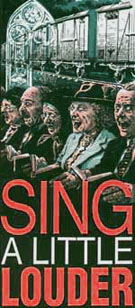
I lived in Germany during the Nazi holocaust. I considered myself a Christian. I attended church since I was a small boy. We had heard the stories of what was happening to the Jews, but like most people today in this coutnry, we tried to distance ourselves from the reality of what was really taking place. What could anyone do to stop it?

A railroad track ran behind our small church, and each Sunday morning we would hear the whistle from a distance and then the clacking of the wheels moving over the track. We became disturbed when one Sunday we noticed cries coming from the train as it passed by. We grimly realized that the train was carrying Jews. They were like cattle in those cars!

Week after week that train whistle would blow. We would dread to hear the sound of those old wheels because we knew that the Jews would begin to cry out to us as they passed out church. It was so terribly disturbing! We could do nothing to help these poor miserable people, yet their screams tormented us. We knew exactly at what time that whistle would blow, and we decided the only way to keep from being so disturbed by the cries was to start singing our hymns. By the time that train came rumbling past the church yard, we were singing at the top of our voices. If some of the screams reached our ears, we'd just sing a little louder until we could hear them no more. Years have passed and no one talks about it much anymore, but I still hear that train whistle in my sleep. I can still hear them crying our for help. God forgive all of us who called ourselves Christians, yet did nothing to intervene.

Now, so many years later, I see it happening all over again in America. God forgive you as Americans for you have blocked our the screams of millions of your own children. The holocaust is here. the response is the same as it was in my country -- Silence!
The story of an elderly gentleman he told to Penny Lea, as told in Alvin Reid's book Introduction to Evangelism, pg 339, quoting the brochure, "Sing a Little Louder," by Penny Lea.

Wednesday, December 5, 2007

I Want to Look Through a Waterfall


I want to be on the other side of a waterfall looking out at the world. OK, so I've been behind pool waterfalls. Those don't count. I want to go behind a natural waterfall, both small and great. And from there I want to view the world.

I want to do this because I think that we probably are viewing reality from behind a waterfall right now. We think we know how things look, but one day we'll step out and see the truth and realize reality was distorted more than it seemed. The writer of Corinthians put it this way "now we see as in a mirror, then we shall see face to face. Now I know in part, then I shall know in full, even as I am fully known."


and, no, I didn't take the picture...if I remembered where I found it I would link to the original source